SERVE Projects
New postings
Dr. Eric Grebing received new funding from the University of Indianapolis for the project “The Rural Early College Network – CELL”
SERVE will conduct an evaluation that will examine implementation of these activities and then will assess changes in the mediating factors – the treatment EC programs in the CELL EC Core Principles and the development of sustainable early college practices throughout the RECN network. For outcomes, the evaluation will assess 9th and 10th grade student impacts on attendance, success in college preparatory coursework, enrollment and success in dual credit courses (including AP), and student performance on the PSAT. The evaluation will also assess the extent to which the project is attaining its goals for sustainability and scale including the number of endorsed EC programs in Indiana and the number of teachers credentialed for dual credit.
SERVE Center Awarded Region 6 Comprehensive Center
 Co-PI: George Hancock
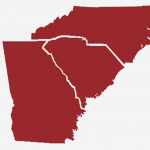
The SERVE Center will operate the Region 6 Center (RC6) to provide intensive, capacity building services to Georgia, North Carolina, and South Carolina. SERVE outlines a Five-Year Plan based on identified needs in the three states.
SERVE will provide “intensive” capacity building services to state education agencies (SEAs), local education agencies (LEAs), and others to address four High-Leverage Problems:
1. Statewide Systems of Support to Low-Performing Schools
2. Support to Rural Schools
3. Equitable Student Access to Effective Teachers and Principals
4. Positive School Climates through Student Supports and Family Engagement Interventions
The fifth area in the Five-Year Plan is support for the National Center’s “targeted and universal services” to SEAs, REAs, LEAs, and schools.
The intended clients in Georgia, North Carolina, and South Carolina include: (1) schools and districts that have high percentages or numbers of students from low-income families; (2) LEAs and schools who are implementing comprehensive support and improvement (CSI) or targeted support and improvement (TSI) activities; and (3) rural schools and districts.
SERVE Center Continues to House the National Center for Homeless Education
 Director: George Hancock
The SERVE Center has been awarded a five-year, $6.2 million grant from the U.S. Department of Education to improve educational opportunities and outcomes for children and youth experiencing homelessness across the nation.
The grant will continue the work of the National Center for Homeless Education (NCHE), which has been housed in the Serve Center since 1998. As the technical assistance and information center for the federal Education for Homeless Children and Youth (EHCY) program, NCHE assists state coordinators for homeless education in all 50 states, operates a national hotline, collects and disseminates data, and conducts regional and national presentations on homeless education.
The work of NCHE has far-reaching impact. Nationally, approximately 1.5 million children and youth are homeless.
Bryan Hutchins was awarded a competitive AERA Grant that will provide him with funding to do his research and give him the opportunity to connect with senior researchers in his field.
The purpose of this study is to assess whether non-college bound youth (defined as those who do not attain any postsecondary education credential after high school) who take part in a sequence of science, technology, engineering, and math (STEM) coursework as well as work-based learning during high school are more likely to experience positive school-to-work (STW) transition outcomes compared to non-college-bound youth who do not take STEM courses or those who take STEM courses outside of a meaningful sequence or pathway using data from the Educational Longitudinal Study of 2002 (ELS:2002). Few studies to date have explored whether participation in structured STEM coursework and work-based learning activities provides an advantage to non-college bound youth in particular who enter the workforce without the training and experience that would come from postsecondary education. Results from this study will inform efforts around career pathway program development and career advising that are tailored to the needs of non-college bound youth, particularly for the small, but substantive group of non-college bound youth who never enroll in college.
SERVE is conducting the evaluation of Project EQuIPD (Engaged Quality Instruction through Professional Development), a two-year intensive professional development program that seeks to build teachers’ expertise in inquiry, technology, and systems thinking. Funded by a U.S. Department of Education SEED grant and implemented in Florida, Project EQuIPD will provide support to 100 K-9 teachers. The evaluation is a randomized controlled trial in which approximately 250 teachers will be randomly assigned to receive the training or to be in the control group. The evaluation will assess project impacts using observations, surveys, teacher logs, and teacher lesson plans and will collect data on implementation using program records, observations and interviews.
The SERVE project team includes Julie Edmunds (PI), Wendy McColskey (interviews), Karla Lewis (fidelity of implementation), Nina Arshavsky (observations), Victoria Coyle (surveys), Bryan Hutchins (data), and Melissa Williams (project support); we are working with Bob Henson from the UNCG ERM Department who will be leading the impact analyses.
Lead PI: Melissa Williams; PI: Wendy McColskey
- In this final year, SERVE Center proposes to develop abstracts of the method and findings of each SERVE report completed over the life of the grant and organize them by year and grant goal/focus (professional development, technology/Starfish, etc.).
- SERVE will meet with the FT Title III Director to identify a list of Forsyth Tech reports over the last four years relevant to the goals/objectives of the Title III grant. The FT Director will then provide SERVE with the files/copies of the relevant reports. SERVE will then review the reports and draft an initial summary of findings of the reports relevant to key Title III goals/objectives. Feedback from the FT Title III Director will inform the final form of this summary section.
- The final section of the report will summarize key stakeholders’ perceptions of grant progress and impact.
Lead PI: Wendy McColskey
- Conduct site visits to all grantees in the spring of 2019 in order to generate recommendations regarding effective program models, leveraging of community-based resources to expand student access to learning activities, and to provide each grantee with individual assistance, if needed, in tracking key performance data on student progress. The site visits will include observations of activities and interviews with program staff.
- Collaborate with NCDPI to plan and conduct a face-to-face meeting of grant recipients in May 2019 so grantees can share their progress and challenges, and approaches to reporting on student progress.
- Develop and administer an online progress reporting survey of Program Directors in June 2019 that includes items as required in the legislation (e.g., alignment with State academic standards, the source and amount of matching funds and other implementation features mentioned in the legislation).
- Manage the required submittal of an evaluation report that includes performance measures of student progress from the 18 grantees by August 2019.
- Deployment of multiple tiered supports in schools to address student barriers to achievement, such as strategies to improve chronic absenteeism, anti-social behaviors, academic growth, and enhancement of parent and family engagement.
- Alignment with State performance measures, student academic goals, and the North Carolina Standard Course of Study.
- Prioritization in programs to integrate clear academic content, in particular, science, technology, engineering, and mathematics (STEM) learning opportunities or reading development and proficiency instruction.
- Minimization of student class size when providing instruction or instructional supports and interventions.
- Expansion of student access to high-quality learning activities and academic support that strengthen student engagement and leverage community-based resources, which may include organizations that provide mentoring services and private-sector employer involvement.
- Utilization of digital content to expand learning time, when appropriate.
Julie Edmunds, with Fatih Unlu (RAND) and Elizabeth Glennie (RTI)
Five year grant to conduct a long-term follow-up of RCT of North Carolina’s Early College High Schools.
Lead PI: Julie Edmunds
Dr. Edmunds will serve as a Research Affiliate for the UNC System, assisting other UNC schools in developing proposals that improve postsecondary student success and that utilize a strong evaluation design.
Lead PI: George Hancock
- Provide analyses of Youth Risk Behavior Survey (YRBS) and Profiles data;
- Demonstrate trends in specific adolescent sexual health risk and protective factors;
- Assist in the articulation of key school and district level sexual health risk and protective factors;
- Identify opportunities to embed YRBS and Profiles processes within the district to ensure institutionalization and sustained implementation; and
- Collaborate with school and district staff to inform programming, develop professional development activities and improve student outcomes.
- Semi-annual collection of evaluation data for Components 2 with submission to the Program.
- documenting program accomplishments and strengths and sustaining those program elements;
- identifying areas in which programs can be improved, or in which new needs emerge, and refining program activities; and
- communicating program accomplishments and needs to stakeholders.
Lead PI: Julie Edmunds
This proposal extends an ongoing longitudinal randomized controlled trial (RCT) to examine the impact of early colleges on students’ postsecondary degree attainment, employment, and earnings. We are also proposing a sub-study to conduct an updated and more comprehensive cost analysis.
Eric Grebing and Nina Arshavsky are conducting a program evaluation for the RTI International Center for Education Services regarding their support for project-based learning (PBL) in Johnston County Schools. The project is exploring the extent to which teachers are implementing high-quality PBL units and the extent to which teachers are creating a classroom culture conducive to PBL implementation. The evaluation is descriptive, drawing from site visits to participating classrooms, surveys of teachers, and surveys of students. We will deliver the final report to the RTI team in Summer 2019, providing feedback on the current state of PBL implementation in participating schools and ways in which services provided by RTI can be enhanced. The report will also provide a baseline for applying a more rigorous evaluation design to RTI’s support for educators in future school years.
We have received a five-year, $5 million grant to study the impact of Career and College Promise in North Carolina. We are partnering with DPI, the Community College System, and RAND on this one. Julie, Karla, Eric, Nina, and Bryan will all be involved in the work.